Why Fall Protection Is Critical
Falls remain one of the most dangerous workplace hazards. In 2019, more than 600 workers died from falls and over 48,000 were seriously injured. For industries like construction, roofing, warehousing, and energy, fall protection is not just a regulatory requirement—it’s the key to preventing life-altering accidents.
By understanding the types of fall protection, the standards that govern them, and the best practices for implementation, employers can keep workers safe while avoiding costly OSHA violations.
OSHA Fall Protection Height Requirements
The Occupational Safety and Health Administration (OSHA) requires fall protection when workers operate at the following heights:
- Construction: 6 ft.
- General Industry: 4 ft.
- Shipyards: 5 ft.
- Long-shoring: 8 ft.
- Scaffolding: 10 ft.
Failing to comply with these rules is one of OSHA’s most frequently cited violations.
Active vs. Passive Fall Protection
Fall protection systems are generally divided into two categories:
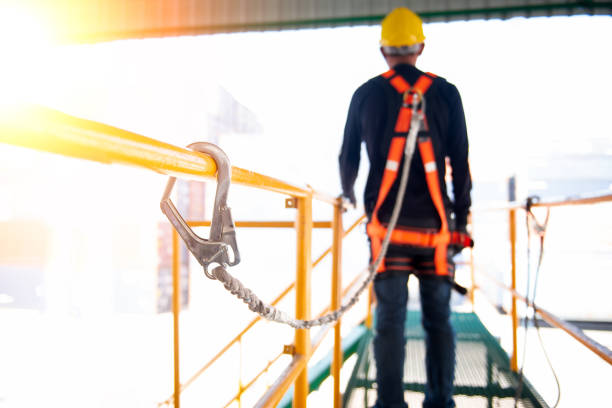
- Active Systems – Require the worker to wear and use equipment such as harnesses, lanyards, lifelines, and anchors. Workers must be trained to inspect and use gear properly.
- Passive Systems – Do not require worker action once installed. Examples include guardrails, safety nets, and barriers. These often serve as the first line of defense.
Most worksites use a combination of both to achieve maximum safety.
Industries at Highest Risk for Falls
Different industries face unique hazards. Here are some of the most common:
- Roofing & Construction: Workers face steep edges and high fatality rates without proper anchors and lanyards.
- Scaffolding: Requires both passive and active protections such as rails and harnesses.
- Warehousing & Manufacturing: Elevated mezzanines, ladders, and loading docks pose daily risks.
- Oil, Gas & Mining: Hazardous conditions require full-body harnesses, lifelines, and rescue systems.
- Window Washing & Tower Work: Workers often climb hundreds of feet and must remain continuously tied off.
Types of Fall Protection Equipment
To make it easier to remember, experts often refer to the ABCs of fall protection:
- Anchorage: The secure attachment point strong enough to stop a fall.
- Body Wear: A full-body harness (belts are no longer recommended).
- Connectors: Devices like energy-absorbing lanyards or self-retracting lifelines that link workers to the anchor.
Additional systems include:
- Fall Arrest Systems: Stop a fall in progress and limit injury.
- Positioning Systems: Hold workers in place while leaving hands free.
- Suspension Systems: Used for tasks like window washing or painting.
- Retrieval Systems: Enable quick rescue in emergencies or confined spaces.
Building a Fall Protection Program
Equipment alone isn’t enough—safety depends on how it’s used. Employers should develop a comprehensive fall protection plan that includes:
- Training – Every worker should know how to inspect, wear, and use their gear. OSHA requires a “competent person” to supervise.
- Planning – Create job-specific safety plans that cover both prevention and emergency rescue.
- Inspection – Workers must inspect equipment before and after every use. Damaged gear must be replaced immediately.
- Installation & Monitoring – Qualified personnel should set up and regularly review all systems for correct use.
- Maintenance – Proper cleaning, storage, and replacement extend equipment life and ensure reliability.
OSHA & ANSI Standards
Two key organizations regulate fall protection:
OSHA – Enforces federal workplace safety regulations.
ANSI (American National Standards Institute) – Creates industry best-practice guidelines, often adopted by OSHA into enforceable law.
Together, these bodies establish the rules that keep workplaces consistent, safe, and compliant.
Final Thoughts
Falls are preventable—but only if employers take fall protection seriously. By combining OSHA-compliant equipment, worker training, and a clear fall protection plan, organizations can dramatically reduce risks and protect their most valuable asset—their people.
When safety comes first, productivity follows.